| Bullet |
|---|
| Conceived in a dream in July 1948, Paul Fisher was soon machining a new pen design shaped from solid aluminum. It became our first Fisher ball point pen, the #400 Chrome Bullet Pen, and arguably the most popular pen of the twentieth century. Cited as an outstanding example of industrial art, the classic design of the Fisher Bullet Pen has been exhibited for years in the New York Museum of Modern Art. The Bullet's timeless styling has been the topic of many art books and magazine articles. Often imitated but never duplicated, the Fisher Bullet continues to be our most popular pen. |
| Astronaut |
|---|
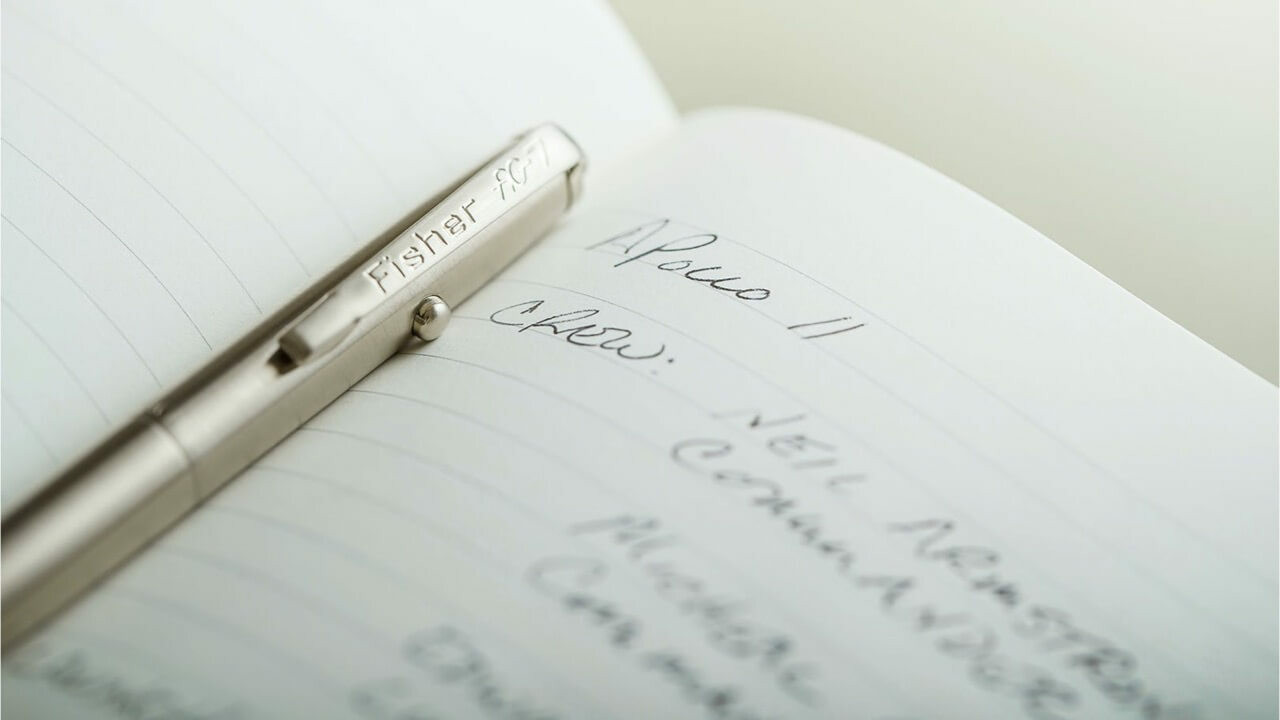
| Paul Fisher had been manufacturing better writing instruments with a devotion to accuracy, intellectual honesty and fairness long before the United States Space Program began. But when astronauts started to explore the reaches of outer space, Fisher realized that no existing pen could perform in its boiling hot vacuum. His common sense approach and practical experiments resulted in the invention of the sealed-pressurized Fisher Space Pen. After months of rigorous testing, NASA selected the Fisher Space Pen for use on all of the Apollo missions. They are still used on all manned space flights American and Russian. |
| Unique |
|---|
| Functionality, form and elegance meet to blend in what can only be described as some of the most unique writing instruments in the Fisher line. Stunning in individuality and the assurance of tried and true Fisher Space Pen quality. |
| Specialty |
|---|
| Several of the Fisher's products can be classified as specialty items. While these pens and other articles may be unusual in the design, they are crafted with the usual Fisher attention to detail and quality. |
| Economy |
|---|
| While less expensive than other Fisher models, these pens are unconditionally guaranteed to have the same superior writing quality and dependability found in every Fisher Space Pen. |
| Space Pen Refills |
|---|
| Unlike ordinary ball pens which rely on gravity to feed ink, the Space Pen has a replaceable cartridge is pressurized. At nearly 50 pounds per square inch, ink is continuously fed to the tungsten carbide ball, allowing the user to write at any angle, even upside down. This advancement required the development of a special ink. |